India Wallace and Catherine Ooi of Pure Land Home Hospice take Steve on a wide-ranging wander through death anxiety, heavens, hells and unfinished business ahead of the third SA Death Festival, before Steve Davis and The Virtualosos close with a brand-new Hamlet-inspired song, “Cowards of Us All”.
A week before the third SA Death Festival at Centennial Park, Steve sits down with India Wallace and Catherine Ooi to ask what we’re really afraid of: being dead, or the business of dying? The answer reaches from a hospice companion who helped a woman set down a lifelong secret to the surprising power of a family saying, “You can leave. We’ll be okay.”
There is no SA Drink of the Week this episode.
The Musical Pilgrimage is a world premiere: “Cowards of Us All” by Steve Davis and The Virtualosos, inspired by Andrew Scott’s Almeida Theatre take on Hamlet’s soliloquy, a diagnosis that arrives out of the blue, and a moth that made it outside, if only briefly.
You can navigate episodes using chapter markers in your podcast app. Not a fan of one segment? You can click next to jump to the next chapter in the show. We’re here to serve!
The Adelaide Show Podcast: Awarded Silver for Best Interview Podcast in Australia at the 2021 Australian Podcast Awards and named as Finalist for Best News and Current Affairs Podcast in the 2018 Australian Podcast Awards.
And please consider becoming part of our podcast by joining our Inner Circle. It’s an email list. Join it and you might get an email on a Sunday or Monday seeking question ideas, guest ideas and requests for other bits of feedback about YOUR podcast, The Adelaide Show. Email us directly and we’ll add you to the list: podcast@theadelaideshow.com.au
If you enjoy the show, please leave us a 5-star review in iTunes or other podcast sites, or buy some great merch from our Red Bubble store – The Adelaide Show Shop. We’d greatly appreciate it.
And please talk about us and share our episodes on social media, it really helps build our community. Oh, and here’s our index of all episode in one concise
page.
Running Sheet: SA Death Festival The Key To Living Well
00:00:00 Intro
Introduction
00:00:00 SA Drink Of The Week
No SA Drink Of The Week this week.
00:03:28 Catherine Ooi and India Wallace
Steve opens with Andrew Scott’s 2017 Hamlet for Almeida Theatre, then makes a confession. A few years ago he fainted in the middle of the night, hit his head hard enough to need stitches, and remembers only what he calls “perfect nothingness”, a strangely unfelt bliss. Set that beside Dante’s circles of hell, which he’s reading at the moment, and his question becomes sharp: is our fear about being dead, or about dying?
Catherine Ooi chairs Pure Land Home Hospice, works on Malaysia’s national palliative care standards and is researching death anxiety for her PhD. She delivers a humbling finding: the field has no agreed definition of the fear it studies. Two people with identical diagnoses can have wildly different experiences of it. Her argument for a festival is that death touches everything, from existential questions to money, burial choices and relationships. Festivals, she says, exist for people to ask the right questions rather than receive neat answers.
India Wallace co-founded the hospice and organises the festival. Her hospice “companions”, who are “not friends, but they’re friendly”, can hear what family members often can’t. One woman carried a massive secret for decades, and after confiding in her companion she felt lighter and went on to have what India calls a beautiful death. India also tells a personal story. Her sister, a committed atheist, became curious about Buddhism and began attending Theosophical Society talks after her husband died. India herself practises a daily exercise in impermanence on her farm driveway: that house won’t be there, that cow won’t be there, and neither will she.
Steve brings in Camus, Ecclesiastes, Bronnie Ware’s regrets of the dying, The Unbearable Lightness of Being (his pick for the finest title in fiction), and a tangent about the farmer whose world Napoleon upends. Catherine seizes on the farmer. A diagnosis is the same earthquake, and the hospice response is “I’m here with you” rather than a script of answers. A man who loses his legs may find a new normal, and for someone near the end that might simply be a flower that bloomed in the garden today.
There’s also a call back to our important episode from 2016 – Life And Death In Adelaide – in which five of Steve’s friends secretly recorded their eulogies for him and he only got to hear them during the show.
The conversation turns to what people reach for at the end. India names forgiveness, including a Daw Park Hospice role-play that helped two sisters finally talk. Catherine’s most surprising observation is permission. Sometimes a dying person holds on because they can’t leave a family in fear and grief, until someone tells them they will be okay. She also gently refutes the idea that fear means a lack of acceptance: acceptance, she says, isn’t the absence of fear. They also cover death doulas (unregulated, so “buyer beware”), death literacy, and why more people would die at home if they felt supported.
Finally, the festival itself. Between them they recommend Catherine’s death anxiety session, the impermanence meditation, the Pure Land Home Hospice session on dying at home, creative activities, a Peter Goldsworthy talk, and a community picnic extended to 90 minutes this year. The Advance Care Planning workshop is booked out, so book early next year.
01:13:10 Musical Pilgrimage
In the Musical Pilgrimage this week we listen to Cowards Of Us All by Steve Davis & The Virtualosos.
Steve had started a song in anticipation of this interview, but the conversation fed into his psyche and produced something else. It draws on Andrew Scott’s performance of Hamlet’s soliloquy, the “undiscovered country” and a line about conscience making cowards of us all. It also carries Catherine’s point that a diagnosis can be your own Napoleon, and a moth that his daughter freed from the house, only for a bird to complete another circle of life. Steve also issues a call-out: if you’re a performer who’d like to take these lyrics under your wing, get in touch via stevedavis.com.au, where the longhand lyrics and scribbled notes live.
Here’s this week’s preview video
There is no preview video this week, however, this video opened the interview. And incredible performance of To Be Or Not To Be by Andrew Scott for Almeida Theatre.
SFX: Throughout the podcast we use free SFX from freesfx.co.uk for the harp, the visa stamp, the silent movie music, the stylus, the radio signal SFX, the wine pouring and cork pulling SFX, and the swooshes around Siri.
An AI generated transcript – there will be errors. Check quotes against the actual audio (if you would like to volunteer as an editor, let Steve know)
441 TAS
===
Steve Davis: [00:00:00] Hello, Steve Davis here. Welcome to episode 441 of The Adelaide Show podcast, and we’re going back to a topic that I love because it helped craft one of my favorite episodes of all time. That was episode 157, when I had five close friends secretly record their eulogies for me, and I didn’t get to hear them until the end of a conversation with a couple of celebrants on how to write eulogies.
It’s a fascinating way to address topics of our impermanence, the topics of death. And today, we’re coming at it from a different angle because at the time of recording, it’s a week away from South Australia’s third SA Death Festival. It’s on for its third year. It’s Sunday, the 18th of October 2026 at Centennial Park.
And India and Catherine are gonna join us very shortly to take us on [00:01:00] a, well, a no-holds-barred wandering through all the topics that relate to what the SA Death Festival is all about, which is a day dedicated to conversations about death, dying, grief, and what it means to live well. A lot of things there.
The link is in the show notes. I hope you can get along. I hope you’ll find this conversation, um, thought-provoking. It’s– I thought we’d be going to have a wonderful conversation. I can tell you right now, it’s already deeply changed my relationship to death and my comfort level in reflecting on it with others.
I hope it’s the same outcome for you, and we’re gonna finish off with a song, a new one by Steve Davis and the Virtuosos that I’ve written. I’d started writing one in anticipation of this [00:02:00] interview, but then this interview really fed into my psyche, and so this song, uh, has arisen from that. It’s called “Cowards of Us All,” and we’ll finish off with that.
TAS Theme: Wave on wave, she’s got a bad rep
Yad lady, yad lady oo, brings it down on his knees. Yad lady, yad lady oo. Oh
Caitlin Davis: In the spirit of reconciliation, the Adelaide Show podcast acknowledges the traditional custodians of country throughout South Australia and their connections to land, sea, and [00:03:00] community. We pay our respects to their elders past and present, and extend that respect to all Aboriginal and Torres Strait Islander peoples today.
TAS Theme: Adelaide, Adelaide, Adelaide
Andrew Scott: P
were not to be
That is the question Whether ’tis nobler in the mind to suffer the slings and arrows of outrageous fortune
Or to take arms against a sea of [00:04:00] troubles, and by opposing And them
to die.
To sleep No more. And by a sleep to say we end the heartache and the thousand natural shocks that flesh is heir to
‘Tis a consummation devoutly to be wished?
to die
to sleep
To sleep Perchance to dream[00:05:00]
Hi, there’s the Rob
For in that sleep of death What dreams may come when we have shuffled off this mortal coil must give us pause
Steve Davis: That was Andrew Scott, um, put out by the Almeida Theatre in the year 2020. An amazing performance in which he’s giving the oldest question in theater everything he’s got. Here in South Australia, at the time of recording, next Sunday the 18th of October, um, the third SA Death Festival is on at Centennial Park in Pasadena.
It’s free. It runs from quarter to nine till five, and it’s a whole day of talks. There are death cafes, art in the park, and market stalls, [00:06:00] all about dying, grief, and how to live well. And with me are two of the women behind it. India Wallace co-founded Pure Land Home Hospice, which gives free care to people dying at home, and she is one of the organizers of the festival.
And Catherine Ooi chairs the hospice, works on Malaysia’s national palliative care standards, and is researching death anxiety for her PhD. And today with them both, I’d like us to wonder, you know, discover what we’re really afraid of, whether the heavens and hells in our worlds help or hinder us, and what it means to have lived a meaningful life.
India and Catherine, welcome to the Adelaide Show.
India Wallace: Thank you. Thank you,
Steve Davis: Steve. India, I’d like to start with you first because there’s no doubt somebody listening right now, they might be in a car, in the kitchen, they’ve just heard Death Festival. What do you [00:07:00] imagine they’re thinking or feeling at this point in time before we’ve had our conversation?
India Wallace: I think a lot of people are a little bit frightened to come, and they might be imagining it to be a bit like the Day of the Dead, Steve.
Catherine Ooi: Yeah.
India Wallace: But it’s actually nothing like that. It’s not ghosts and ghoulies at Centennial Park. It’s far from that. It’s really about getting community together and discussing this important topic of death and dying, something that we often want to push into the background, but that just creates more fear.
So this was designed to change the way people think about death and dying and grief in South Australia. And bit by bit, I feel like we’re doing that through Pure Land Home Hospice and through the SA Death Festival.
Steve Davis: And we’re gonna learn more about both of them. But Catherine, what’s your reflection? What do you think might be going through people’s minds?
And do you agree with India that perhaps we, we veer away from this topic more often than not?
Catherine Ooi: [00:08:00] Oh, oh, absolutely. I, I, I definitely stand very firmly on the, the, the soapbox of death anxiety is a very real thing in human society, um, and is in fact reflected in a lot of our, our actions from- Um, we want buildings in our names to books that live forever after us, statues in our honor, all of that.
Um, and, and people will often think about death anxiety in terms of, oh, it’s only at the end of life. Yeah, when I have cancer, then I’ll have a death anxiety. Um, but, um, I, I would sort of, uh, humbly present that it, that’s not quite, not quite the full picture. And if you wanna explore a little bit more outward, um, than death anxiety is something that’s, uh- Subliminally perhaps dictates so much of our actions, even some of our values, um, major decisions, relationships, aspirations, um, how we would explore [00:09:00] or what, what we are capable of exploring in terms of death and dying and the afterlife.
How, how deep or how narrow that, that wheel becomes. I, I personally think h- death anxiety plays a sometimes small, sometimes big role in it, um, our, our, our own latent fears. Uh, but in terms of the death festival, that is such, I believe, so timely for South Australia, and so incredibly important for every community to have something of this nature, um, big or small.
And the argument I would make is because death festivals sort of give you an incredibly direct link, um, between so many aspects of death. And when we think about it, we tend to think about it in a like, “Oh, it’s medical,” or it’s one thing or the other. But when you go to a festival, you can see how everything links together, whether it’s your deepest [00:10:00] existential questions, whether it’s your spiritual questions or knowledge or reflections, whether it’s your practical choices about money, about, um, um, care of the body, about where you would like to be buried when, when, up- upon death.
It is so many things coming together. It’s about relationships really, more, more than anything else at, at the heart of it. Um, so these festivals are important because they, they don’t just, um, exist to give people answers. Uh, the way I see it is these festivals are here for you to ask questions, to ask the right questions.
Mm. More and more questions and, and to sort of almost journey with you, um, as, as you go through all of these experiences in different stages of life.
Steve Davis: I want to pick up on the, the way you, you touched on the subliminal presence of this question. It’s sort of with us all the time. Uh, death, what happens, et cetera.
‘Cause in fact, the longer part of that [00:11:00] soliloquy from Shakespeare, he calls the fear of dying the fear of entering the undiscovered country. And, and Shakespeare argues we’re prepared to put up with what we’re enduring because we’d rather stay with what we know rather than rise to the unknown. So I, I, I agree.
I, I think it has more of an impact on us, even if we’re not verbally saying the words death or talking about such anxiety. But to ground this forward, I, I’m very curious with this as an entry point because a few years ago, in the middle of the night, I got up And as I was moving about in the dark, I suddenly fainted.
And at that moment, everything faded to black, and I was fleetingly aware for a moment that I was just falling, but that was it. I was drawn into what I would call perfect nothingness. And as it turned out, as I fell, I hit my head really badly. There was cuts, it needed [00:12:00] stitches, et cetera. I felt nothing. In fact, there was a, an unfelt bliss in that state I had temporarily embraced, and I would like to explore that in tension with this.
I’m also, for my sins, reading Dante’s Divine Comedy at the moment, and in that, he’s taking us down into the different layers of the hell that was imagined. And in all of human history, there’s been amazing imaginings of what happens after death, some beautiful, some terrifying, and I think at some level, humans, we’re our own worst enemies on that front.
So to draw these together Catherine, with your research that you’re in the middle of, do you think the fear that we’re talking about here is the fear of being dead, or is it the fear of dying, that pain, the indignity, the loss of control, that transition? Could you talk [00:13:00] to that for me a little?
Catherine Ooi: Well, uh, the, the first thing I’ll say is that even in my research, and actually I was quite, uh, taken back because I used to run a hospice, quite a substantially large one in Malaysia, and thought, “Oh, I’ll do this area,” because I, I don’t see a, a whole lot of, um, coverage on it.
But when I went into it properly, I, I… then I realized we don’t even have a definition. We don’t have a pre-agreed, uh, s- supposition of how fear, fear and anxiety around dying works. So, um, my professor was, who’s incredible, just sat me down and said, “Oh, I guess that’s your work now, so you just spend, you know, a, a lot of time now looking into what, what that means really.”
Uh, and my interest, I have to admit, um, first and foremost, is really in palliative care. So, so for the dying person, what does that fear look like? For people around them, what does that fear look like? Uh, what describes it? And for professionals, you know, what do they think of it? How [00:14:00] do they define that fear?
But the, the one thing I c- I can really encapsulate, um, is that we, that there is no real, um, true definition. There is so many varieties of how that fear and anxiety is seen, experienced, and interpreted, uh, by people depending on their circumstances. So for example, a, um, a, a person with the, two person with the exact same, um, condition and, you know, um, disease trajectory, and they’ve been given the, uh, uh, everything exactly the same, will have an incredibly different, um, fear experience or worry experience.
Uh, very, very different, uh, from, from the other person. And, and that’s the part really that’s very hard to pick apart, to understand, and to sort of figure out, for example, from a, from, from even a public health perspective, what can be done? What can we do about this? When, when you’re talking about huge [00:15:00] diversity, especially in Australia, um, how do we then look into this in a holistic manner?
Um, and, and I, I guess that’s why, you know, I’m such a champion of the community hospice model and trajectory, uh, which doesn’t want to or claim to be an expert in palliative care or anything. But we, what, what we want to be experts at is human, like, the human person, the com- the, the people in the community, families, you know, to be very, very close to them.
Uh, and we have the luxury of time. And time Time, uh, which not every hospital system, for example, or very big bureaucratic, uh, organization, uh, we can provide time. And, and, and that, I think that’s a very, very good reason, um, to look at fear, fear of dying. Ju- just as one aspect of distress because there’s so much.
There’s anticipatory grief. There’s all this lack of knowledge and [00:16:00] understanding about, um, what, what it takes really. Because o- one of the main human, um, main social conditions with a very busy cosmopolitan urban life is you just ignore everything until that things happen, then say, “All right, what, what’s my first three priorities?”
You know, and, and then don’t even know where to go looking for that information. So, um, that, that’s what we, we- Hmm … that, that’s kind of our intention and what, and what, what we’re trying to look at. Um, but with fear. And, and- Yeah, sorry.
Steve Davis: No, no, I was also… Uh, just while we’re on that, uh, within the hospice environment- Mm-hmm
and reflecting there, India, can I bring you in here with things that you’ve witnessed and experienced, and how you would describe what Catherine has described from, from what you’ve seen and experienced?
India Wallace: Yes, Steve. I guess my experience is within that hospice area, and I, my former life was as a counselor, and I worked with a lot of women that had breast cancer.
So obviously many of those [00:17:00] died as well. So I’ve been by the bedside a fair bit. And working with people and families, uh, long before they die, actually. Catherine mentioned that before. And I think that’s a really important thing to mention. The earlier that we can support people, the better they are at the end.
Some people won’t look at anything until it’s the final days or hours, and I feel that those people suffer more, to be honest. So we try and work with people way before their death day. Mm. And we have companions. So these companions are not friends, but they’re friendly, if that makes a difference. Mm. And, uh, they work with these people sometimes for years, you know, a couple of years from diagnosis, and they get to know them, and that person begins to trust that person.
And the value in this, I think, is that many people who are approaching death don’t want to talk [00:18:00] to their friends or family about certain things. They don’t want to worry them. They don’t want to upset them. And sometimes if they do try and talk to them, they’ll get a, a bad response. Something like, “Oh, no, well, that’s not gonna happen,” or, “No, you’re not gonna die,” or, or any of these things, which doesn’t really help the person that has this life-limiting illness.
So the companions are there to listen, which is really important, and they can say anything to these people. And we’ve had some incredible things happen during that time. I remember one lady that, um, uh, was, had a companion, and she had this massive secret, Steve, that she’d carried all her life, and she was a beautiful lady.
Oh. And her daughters knew that she had this secret, but they didn’t know what it was, and they talked to the companion and, and said, “Look, mum’s got this secret.” So they talked to their mother, and they said to her, “Please trust the companion and have a chat,” which she did, and honestly, it was life-changing.
This person changed from that day in. [00:19:00] She told the companion that she felt much lighter. She was ready to die. She had the most beautiful death, and she didn’t have to take that with her. So these are the things that are really important and that sometimes we hold back on. And I totally agree with Catherine.
Every death is different. Every person is different. Every fear is different. A lot of people are afraid of the pain. So we can help them alleviate that fear in many ways. We also have a clinical side to the hospice, but we also work alongside a lot of specialists as well and have great relationships with them.
So- There’s, there’s different things that people are afraid of. You know, some people are afraid of what happens after they die as well. Mm. Um, I know one person once said to me that he was afraid of being a ghost and haunting people, and didn’t want to die at home. So, you know, there’s, there’s many aspects to this.
It’s, it- it’s just so different with each person and family.
Steve Davis: Why, why is this the case? [00:20:00] Uh, it’s, is it just because we’re all very uni- well, we’re all unique? But you’d think at some point, we’re commonly humans, that you’d expect to see vast defined patterns. But are you saying- It’s really hard to find those patterns, m- especially- I think-
with the case that Catherine mentioned before. Same disease, same prognosis, two people, different experiences.
India Wallace: Yeah, I think so. I think it is harder to find. I think everyone gets there in the end and finds acceptance. I really do, and that might be very close to their death, or it might be well before they die.
But do you agree, Catherine? I feel like people do get there.
Catherine Ooi: I, I think I, I love that term actually. I think everyone gets there in the end, because that couldn’t be further… Like, like that is so true. We all get to the door, you know, at, in, in the end. Um, our, everything we [00:21:00] believe in and, and everything we, uh, the, the work we do around palliative care, therefore dying, or hospice, or companionship, all of that is, is just, uh, our passionate, limited, and, you know, like it will have to change as knowledge of what, of the…
Try- trying to arrive closer to what truth is changes, and we will change along with it, but we all arrive ultimately. That, that’s the only true truth, you know? Like, we all arrive at that, that place. Um, with acceptance, I would say from my own experience, um, that is the, that is true for most cases. It’s, it’s not necessarily true for every single 100%, uh, case.
I, I have personally, um, seen, um, a death that was, for example, maybe very angry or very emotional at, at the very last, uh, moment of life, or in extreme pain. Um, these, these things do [00:22:00] happen, um, especially in the old days before, um, med- med- medicine is what it is now. Um, so I, I, I would say that the goal, the goal is really acceptance and, and to have that company and so that when we arrive, when we all arrive, we, we are, we are comfortable.
We are ready to step through that door. Yeah. And, and in, in every, in regards to sort of fear and the experiences being so diverse, um, each from the other, I, I think the tapestry of humanity is- Vast, vast beyond reckoning. And in, in fact, and, and this is, I have, let me just say this is completely personal- Mm
uh, but I think only, I- I think society doesn’t allow us very much to show how vast that color spectrum really is. Ah. So we’re sort of hemmed in by our behaviors- Ah … how we manage ourselves, how we manage [00:23:00] each other, which is why when you come to someone and say, “Oh, I’d like to talk about death,” nobody really says that, but, but they say, “I’ve got this worry,” or, “I have this hypothesis,” and everyone reacts with s- that sort of fear and horror and…
Th- they’re trying to manage that this is where I’m hemmed into, this is proper conversation, this is what proper living looks like, and all of that, and here’s me responding as a, a proper human- … adult person. Um, and all of that gets pushed to the- Mm … under, and, and then it all comes out at the end of life, you know, when it becomes important.
Yeah.
Steve Davis: Catherine, you have just reminded me, uh, later I was going to bring this up, but I’ll do it now. Bronnie Ware, Australian palliative care worker, she wrote The Ti F- the, The Top Five Regrets of the Dying. Mm. And amid all of them, which was, “I wished I’d had the courage to live true to myself rather than what others expected.”
And I think that’s what you [00:24:00] just said, Catherine.
Catherine Ooi: Oh, yes. Yes. That, that’s, that’s one element of it. Yes. A, a very, very huge element and, and Bronnie’s just beautiful, um, with the
Steve Davis: top five regrets. Wow. A- and before we move on from here, India, I want to just come back to you because you did touch on this, of that, that gentleman who was worried about ghosts in the afterlife.
We’ve built these heavens and hells as our best imaginings to understand life beyond. In the moment as people are dying, d- do you feel these become helps or hindrances? Do they add extra weight that shouldn’t be there or can they ease the transition? Now, I know we’re getting into some controversial topic here, but what, what have you noticed?
India Wallace: Once again, I think it’s very individual and personal. Okay. I’ve seen people that have very strong faith have beautiful deaths. I’ve also seen people that have had faiths and perhaps left [00:25:00] those faiths and have a terrible time before they die because they ha- suffer a lot from guilt, and they’re really frightened of going to the hell realms.
So I think it really depends on the person. Um- And I think people with no faith often suffer too, with no faith at all. I’m speaking here personally. My sister was one of those people, which was very interesting, and being a Buddhist, she’s always been a little bit in awe and jealous, for want of a better word, that I have faith in something and, and that I’m not so frightened.
And recently her husband died, and it has completely changed her. She’s gone from being the biggest atheist I’ve ever met to the point where she could actually start her own atheist religion, Steve. Yeah.
Steve Davis: Yeah.
India Wallace: We- becoming a believer in life after death. She’s questioning me about Buddhism. She’s going to the Theosophical Society and listening to [00:26:00] talks.
Mm. She’s so much more open. So I really feel like it’s very individual.
Steve Davis: So you’re- Yeah … suggesting it’s constructive to have these, I guess they’re constructs. They’re ways of anticipating. You’re, you’re, you’re saying on balance, likely to more, be more helpful than not. Is that what you’re saying?
India Wallace: This is just my personal opinion.
Yeah. But yes. I feel like people who have no belief or even a questionable belief that it… Definitely that it’s just all blackness, I feel like that’s hard, that there’s nothing more. Because this gets back to what Catherine and you were talking about earlier. We… That is the fear, that we are no longer, that there is nothing more, that we are over.
That is very frightening to people and makes no sense.
Steve Davis: I- I just want to add something here, and, and maybe either you or Catherine might pick this up, but Albert Camus, [00:27:00] uh, in his writings basically says there is no meaning that you can derive from the universe. But our response to that should be to have this lucid defiance to, to seek, to craft meaning ourselves and to take, I guess, the bull by the horns, if I understand his work correctly Could, could that be, could those two things be true at the same time?
Whether you’ve, uh, within a religious paradigm or a philosophical paradigm or you’re here, ultimately we don’t really know until we ultimately cross over. So it’s our best guess. There are communities around those best guesses, and maybe more than one of them can be true at once
Catherine Ooi: I would say I’m a subscriber to that particular notion, Steve.
Um, and, and for, for listeners out there who go like, “Oh, I’ve got so many questions about this,” we have an interfaith panel, um, in our death festival every single [00:28:00] year that, uh, explores spirituality and death in a variety of ways. This year’s gonna be really, really interesting because we do- not only have an Aboriginal voice, um, looking to death and dying topics and spirituality, we have a humanist priest as well.
So that’s for people who i- identify as atheists, agnostic, um, scientist thinkers, um, not, not, not of the foyer, foyer hat-wearing variety- Yeah, yeah … but I think everyone else. We have a Tibetan Buddhist nun. We have a Christian reverend. So very good spectrum. We only get four people, um, at every panel, so it, there’s always a kind of switcheroo, but this year in particular is very, um, dynamic, and we’re, we’re having a very, uh, wide lens on what religion and spirituality means.
What would it mean to an atheist person who, um, for example, might be, might actually feel quite relieved actually, not, not frightened, [00:29:00] but relieved that after this, all of this stuff and stuffing around, there’s, there’s darkness. You know, I’m like, “Oh, I can get some rest.” You know? Like, so- Yep … so, so there are so many perspectives out there, so many traditions, so many values, and we, we, we sometimes think we, we know what we feel and, and so, and, and then sometimes when something happens or, or sometimes even when we hear a song or see a show or go to a temple or something and realize I, I actually have this entire internal world that suddenly just lifted out of me from the darkness somewhere, and I’m actually this ne- different person that I didn’t know I was.
And India’s story, for example, is a very good illustration of that, um, how her sister discovered these different aspects of herself, aspects which she was so certain did not exist at all and suddenly existed. So that, that, that, and that’s, that’s really a huge argument for why should we [00:30:00] think about death?
Isn’t it morbid? Is it, isn’t it a useless activity? No, I would say it’s, it’s very, uh, the, the furthest thing from useless. It’s part of your own inner discovery, um, your own inner discovery but of what life can be- Mm … of what your relationship, what… And, and for us in, that work in this space, we are very passionate, uh, what society should be, what, what a good society can look like if we embrace death and dying.
Steve Davis: A- already this conversation has been amazing because- My, I was initially expecting that this is going to be a wonderful festival to, to go to, to sort things out for those final stages. But I’m still reflecting on your observation, Catherine, that at a subliminal level our, our minds, our subconscious is dwelling on this, and it’s, it’s impacting everything we do.
Caitlin Davis: Yeah.
Steve Davis: Uh, and so to me, it’s the value. It, [00:31:00] it, it pays a cash value up front, uh- Mm-hmm … to start this conversation sooner rather than later, even if all things being equal, you’ve still got 50 years on the planet. It’s that unacknowledged impact that’s going on that could be steering your decisions in suboptimal ways.
Oh, I
Catherine Ooi: love that.
Steve Davis: Yeah. Wow.
Catherine Ooi: That is beautiful, Steve. And I think you’ve given us a new way to sort of, um, like a, a new target market, you know? Like- … a, a way of communicating, hey, this is why we should actually take this seriously, because we, we firmly believe death and dying topics are not just for public health.
Mm. They’re not just for religion or some obscure organization talking about feelings. It’s relevant to corporations, it’s relevant to governments, to schools, because every one of us have families, loved ones, deal with diseases, have fear. How do we handle that? How do we hold that, um, as [00:32:00] a collective, as, as a small c- mom and pop shop or, or as a, as a large university?
Um, how, how do we deal with it? How do we deal with it in a, a human way, a, a way that recognizes our individuality and, and our needs?
Steve Davis: Mm. Just before I bring something new for us to mull over, India, I was watching your face before. Were you wanting to add something to those comments then?
India Wallace: Yes, you picked up well, Steve.
Thank you. I just wanted to mention that before that interfaith panel session, we have, uh, Venerable Drema, who’s a Tibetan nun, doing a beautiful meditation on impermanence. Now, that word impermanence is something that’s used widely within the Buddhist circles, so we’re used to that word. But quite often I might mention that word to someone, and it’s something they’ve never thought about, Steve, the impermanence of life.
So that will lead beautifully into the panel session, but I think that thinking about our own im- [00:33:00] impermanence can be so helpful. I know it’s something I do on a daily basis. I live on a farm, and we have a big driveway that I walk up and down quite often.
Catherine Ooi: Yeah.
India Wallace: And when I’m walking down that driveway, I often think to myself, “That house is not gonna be there.
That cow is not gonna be there. I’m not gonna be here in however many years.” Now, I know getting back to Catherine talking about how things sound morbid, people can feel like that about what I’m talking about. But it’s actually changing something in my mind to realize the impermanence of life, and to make me live more fully in that day.
Because those things are, are two things that really go hand-in-hand, and unless we can appreciate the impermanence of our life, we’re probably not going to enjoy our life as much.
Steve Davis: Wow. Yeah. Um, you just reminded me, I feel terrible that I haven’t mentioned this yet, because very rarely does a conversation about death go past, or life and its brevity, that I am reminded of [00:34:00] the novel that has simply the best title of any work of fiction in any culture for all of human history.
India Wallace: Wow. What is it?
Steve Davis: The Unbearable Lightness of Being. Yes. That title alone- Yeah … I could dedicate a complete series of episodes to. There’s so much bundled in it. I think you’ve touched on that with that reference to impermanence, and it’s like you’ve read my script, ’cause later I was gonna talk about this.
I’m gonna bring it up now ’cause Ecclesiastes in the Old Testament or the Torah, um, says, “Vanity of vanities,” saith the preacher. “Vanity of vanities. All is vanity.” Which is getting to that point that everything disappears. Everything is gone. It’s over at some point. Is that, does that marry with impermanence, or is there a different nuance to what Ecclesiastes is bringing to the table versus [00:35:00] the Buddhist realm?
India Wallace: I think it marries to impermanence of this life, definitely. But-
Steve Davis: Ah …
India Wallace: given the Buddhist term, um, we would say that we go on and on, and have h- done so since beginningless time.
Steve Davis: Mm. And the other thing is, uh, that I wanted to bizarrely pair with that was John Lennon. He had a song called Whatever Gets You Through the Night- Yeah
Is All Right. Um, and whatever helps you through this life, uh, is all right. Is there wisdom in that, or has he very cleverly come up with an avoidance strategy?
Catherine Ooi: I, I actually think he’s come out with both, and I, I think that’s quite clever because both, uh, is useful at different points. Uh, d- depending on almost the question you’re trying to solve.
But, but I, I did like what you said about, like… Because, because Camus, uh, which you’ve referenced earlier, he talks about the [00:36:00] absurd, isn’t it? And you, and, and then you, you, you said something about the vanity of vanities, of what, of that human endeavor. And, and that really alludes so much to, like, in, in my mind anyway, of Camus’, um, absurdist talk of what, what we try to do in our lives.
Um, that striving, that, that sort of desire or need to m- make everything in, in a certain order, and therefore as permanent as possible, as predictable as possible. So just the absurdity of that, um, which death then helps us, or, or death reflection then helps us, um, to overcome, because we spend so much energy throughout our whole lives.
Um, energy on work, energy on achievement, energy on status, um, energy on the, the, the, what do you call it? The, the external wrappings of the relationships, energy on all our [00:37:00] future plans. Uh, but In my humble opinion, just not so much energy on what it actually means to us. Uh, not, not even necessarily to, to society or to our leaders or to the religion or…
That, that all matters, of course, but to us as, as the human living thing, uh, what, what is, what is that story, that personal, very intrinsic story which is going to be different from everyone else, you know? Like, do we have the courage? Where do we find the courage to create that, that, um, exploration, um, so that we don’t inadvertently end up, like, with this vanity of vanities or with, with Camus’ Absurdius-
Steve Davis: Yes
Catherine Ooi: um, sort of phantom mind that we, that, that we go, like, “Where’s the meaning? What am I doing here?” Yeah.
Steve Davis: Well, well, uh, picking up on that, and also bringing back this image I now have of India wandering along her farm [00:38:00] driveway, uh, I’m listening to and reading a lot of history. Uh, I have suddenly become enamored of history over the last few years, and the reflection on, first of all, the people who end up getting chiseled into our history, and these are people in whose hands are the fate of nations, of the world, of people who are going about their business but get seconded to become a- an arms person.
They, their farm gets taken over to feed the, the army. Their, their partners’ children are raped and murdered and, and these, these figures from history etch channels. Although, I, I must just say, in Tolstoy’s, uh, War and Peace, he does reflect on the end that maybe these people aren’t that. They, they’re there because history was moving that way, and they take the credit.
But that’s a different topic. The main point is there are these people in history. [00:39:00] What if you’re that little farmer, and Napoleon has just changed, turned your world upside down? What’s it like for them to live a meaningful life? And is this question of meaning in life related to how much agency we have over it and the effect we have on others?
Or is it itself a fruitless vanity to even be reflecting on how do I live a meaningful life?
Either of you
India Wallace: You wanna start, Catherine?
Catherine Ooi: Um, I, I, I love that portray of that stark contrast, for example, when life changes so drastically and Napoleon sort of runs right short off to all your farms and, and everything you know, uh, falls away. That is the palliative care experience a lot of people have when you get a diagnosis.
Your entire [00:40:00] world falls over overnight, you know, like when you’re sitting in a doctor’s office. Um, everything as you know it, so that’s that transformation. It, it is abrupt. It is, uh, very often unkind. Um, and, and I, I would say in every person’s life we have a version of that, um, that happens. So which, um, then speaks to the need, the, the, the absolute need, because we are…
I, I, I’ll get in trouble for this. We are in our own ways puny. You know, like, we are one. We are one person. That’s why people is so important, communities and neighbors, you know. Um, and, and the work we do, uh, which everyone thinks is about medicine, about pa- s- you know, palliative care, it’s really at the end of it, it’s really I’m here with you.
Mm. We are going to walk this together, or I’m here. You don’t have to be so afraid. And [00:41:00] it’s not about coming with the answers. And, and hospices will say that at the first run, “We don’t know you. We, we’re gonna walk… We’re gonna get to know you, but we don’t know you.” So that means we don’t know the answers to what’s really, really gonna be the best for you.
You’re gonna tell us that. We’re gonna have a conversation of this, an ongoing one that changes all the time, um, moving forward depending on what’s happening or what you need. So going back to the, the farmer, uh, where, where it’s just staring at desolation and, and, and just going, “How do I go on?” I think that’s the experience of your average person- Mm
when confronted, uh, with, with something profound, uh, life-changing that’s happened, and very, very often, um, would come in the form of a d- uh, a, a disease. Um, so… And, and I really don’t think having answers is the way. Um, it’s, it’s [00:42:00] really, um, how do we ask the right questions? Where do we find the answers? Um, it’s, it’s really that sort of reimagining.
And, um, i- in a way, that sort of softening. You know, not, not looking for checkboxes, but sort of going into what’s, what’s the, what’s the experience now, um, and, and how, how do we map that out as a, as a future goal? And, and that of course means your idea of what is good. For example, if a man loses his legs, does that mean he has no quality of life left?
Mm. Not necessarily. He might have- He might feel in his heart is no quality of life for the first two years, but then discover meaning, discover relationships again, discover, um, profound spiritual, almost spiritual experiences of what it means to be alive. And, and, and, and in the hospice system or in, in, in, you know, whether it’s Death Doulas or, you know, like [00:43:00] people who just deal with this space, that- that’s kind of what we want to explore- Mm
uh, together, to find a new normal, your new reality, your new idea of what’s a good day now. In the past, I was a, a Hyrox, um, competitor, you know, world champion, but what’s my new normal now? And my new normal if, if I’m at the end of life could be I got to the garden today. I saw a flower that bloomed. You know, so just how do we switch, swap that lens which, you know, like, you know, Camus’ chase for absurdity, our, our pursuit of energy, of work, of titles, of money and power.
How does that then transform very slowly, very gently, ho- hopefully gently, um, to I saw- Mm … a flower today? ‘
Steve Davis: Cause the cynical closed person would say, “Oh, that’s a mere trifle to satisfy yourself by saying I saw a flower today.” But vanity of vanities [00:44:00] reminds us that- Yes … to build your huge operation as a CEO is vanity.
I- th- they’re equally vanity of vanities. If you can find beauty and get fed by that experience with that flower, there is a parity between those things. But we were going to come to India to reflect on this as well. Wow. Wow, Catherine.
India Wallace: Yes, Steve, I too have been reading a lot about history in the last few years, and it’s fascinating.
And I think what this is bringing up for me as well is how similar being born is to dying. And, you know, you think about children, and I have a very new grandson at the moment who’s eight months old, and watching him get the biggest pleasure out of something that is so beautiful to him that might be just something we haven’t even noticed.
You know, it might be a blade of grass, which was what was happening yesterday. And if we could just bring ourselves back to that at the end of life, [00:45:00] to the beauty, you know? That’s, that’s one aspect of that. And I feel like the other thing is that, you know, when we’re supporting people in their transition as well, one of the things that’s come up for me very strongly, particularly when I had my counseling, um, business, was that people are very focused on what they can’t do anymore, which is very much a suffering.
So, you know, someone that might love going to yoga, like myself, or they’re very attached to their work, or it can be anything because we all have these attachments. That is the biggest hurdle to get through, I think, or one of the biggest hurdles. So what we would try and do there is to support them into what can they do now.
What, what is really available to them? And, and talk about relationships and who’s around and, and make it very much in the present moment rather than- Yeah … going back into the past of what, what they can’t do anymore, because that is a [00:46:00] huge letting go and a huge suffering for people. All of us will have to face this one day.
Steve Davis: In his amazing song Anthem, Leonard Cohen says, “Every heart, uh, to love will come, but like a refugee.” It almost is that those words can be transposed to finding some peace with our exit or our next move, depending on your worldview. We kinda get there almost by acci- almost despite everything at some level, and what I’m finding is the SA Death Festival and conversations like these are the things that help ease us towards that shore, um, and, and to not do it alone.
Yeah. Wow. Um, I just have one more morsel to bring into the table before we then turn our attention fully onto the festival, and that is from a previous episode of The Adelaide Show back in 2016, [00:47:00] episode 157. I had this weird idea, uh, ’cause I was turning 50, a weird idea of, um, asking five friends to record their eulogies for me without me hearing them.
And then the conversation, we had two celebrants, and we were talking about how to write a eulogy, what’s involved in that process, and then with them all around me, we listened to them one at a time, and it was absolutely mind-blowing. I mean, my oldest serving friend picked one afternoon out of a whole lifetime to focus his eulogy.
I wonder if the two of you could reflect differently i- from situations with people who are near the end, as we say. When they look back, what sort of things do they pick? Is there a… Have you noticed things people have focused on, centered on? We talked earlier about that lady who had that, [00:48:00] that secret that she needed to unburden herself of.
But, uh, is there anything you’ve noticed, um, that feeds into the, I guess, what a eulogy does, which was br- bring a focus somewhere? Could be a broad lens, can be a focused lens. I’ll stop talking and let either of you reflect
India Wallace: I think forgiveness is a big one that comes to mind for me. We all have people in our lives that maybe haven’t forgiven us, that we haven’t forgiven, and that comes up a lot with people around the time of death or before.
And if we can change that in any way, I think that’s helpful for people. I remember I was a volunteer at Daw Park Hospice, and there was a woman, and her sister was there. And I, I, and I knew quite, both of them quite well actually, um, as they’ve also been part of my counseling, um, service. And they had always had problems with [00:49:00] each other, and the sister was out in the waiting room with me, and she was very distraught.
And, and, and I said to her, “You know, why don’t, why don’t you talk to her about it? You know, she’s very open to talking to it. I know she is. You know, let, let’s get this done.” And she said, “Oh, I don’t know what to say.” So I dragged her into a quiet room. I said, “All right, let’s do a role play.” So we did a role play, which worked so well.
Anyway, she went back in, and it was amazing. It, it changed both their lives so much, Steve, and it … I think forgiveness is a huge one
Catherine Ooi: Yeah. Um, I, I, I’d, I’d just say I, I love eulogies and I, I, like, even though I don’t focus on funerals, I… They fascinate me as a human concept that’s evolved over time. Um, the thing with eulogies is they’re incredibly useful and flexible.
So you can use a eulogy for anything you like from, “I know you cheated, Marcus,” you know- … to, like, “This is, like, here are all the [00:50:00] achievements of my life,” or, um, I, you know, like, “The best thing I ever did was have my children.” It, it, you could do it… It’s, it’s really a platform, uh, where you… And we have so little opportunities for this in our lives, don’t we?
Um, to- You can say anything you like or represent anything you like, and you know your audience is gonna just sit there and say, “Uh-huh.” Yeah. Absolutely, you’re right. Like, just, you know, so, so, uh, I’ve seen a lot of- Yeah, and the person
Steve Davis: cannot answer back.
Catherine Ooi: Precisely. Um, so, so it’s, it’s a great opportunity to have fun, say something, get something off your chest- Mm
or, or talk about, you know, what your, what was important in your life. So in- immense flexibility. I, I really love it for that.
India Wallace: Mm.
Catherine Ooi: And I love as well the, um, the, the growing trend, which I hope will grow even bigger, of having your funeral before your, you die so that everyone can actually celebrate. And you…[00:51:00]
Why wait? Why, why, why wait until you’re dead to make that message? You can make it right there and then. And, um, I’m, I’m pretty sure people will also sit there and take it, you know? So- Yeah … so that, that’s, I think, uh, so much better as a, as an experience. Uh- But, but for me- Mm … at the end of life, uh, what I would say my main observation is, is, um- And which surprised me throughout the years the most is really, um, how much permission was necessary, uh, and became important, uh, when you’re looking at family dynamics.
Because there’s a lot of grief and fear or anger or unpreparedness, and this is harking back against, again, into why you need death literacy, why you need death festivals and all these things. Preparedness, and when, what happens as a result of not having a community, a society that, that, um, places importance on [00:52:00] preparedness, then you have all of these, um, anxieties, emotions, clinging, um, lack of acceptance that comes out at the end of life.
And then somebody whose time, it might really, truly, because of pain, un- unbearable pain and so many other factors, be that, it be that person’s time to go, but they can’t leave because they’re leaving their family in grief, in fear, in, in, in all these terrible emotions. Um, so there have been circumstances where at some point of time, um, we, we, we start going, um, “We’ve done everything.
We’ve done everything.” A person still holds on. Now, we need to not put on the clinical hat anymore. We need to put on a detective hat and say, “Why? Why is this happening?” And so often, um, it boils down to [00:53:00] permission from the family to, you know, for, for somebody to say, “You can leave. We’ll be okay.”
AJ Davis: Wow
Catherine Ooi: That’s really profound.
It surprised me, to be honest, how much that helped, how necessary or, um, just, just how powerful it was, um, for, for a dying person to also know that the people that they were leaving behind was all going to be okay, um, and, and everything would be okay
Steve Davis: And if that permission is not forthcoming, is that when we have an unhappy death, a laden death experience?
Catherine Ooi: It’s so hard for me to speak in absolutes, Steve- Yeah, yeah … because this is like, it just rolls as it goes. But from my own experience in, in, in, and, and I’ll say my own hospice, um, ve- very often that the clinging, [00:54:00] um, you know, when, when, when you go through, there’s so much pain. There’s, there’s been no food intake, no water for X number of days.
Um, this person should be drifting away into this subliminal, you know, quiet de- Because the body is incredibly intelligent, Steve. They, it knows what to do. We’re the one that messes it up in our heads. Wow. The body is so clever. It, it goes, it, it has its own processes. It doesn’t need any, well, doesn’t need much- Yeah
interference from the rest of us. Um, but w- we, our minds can stop that process if we think we’ve not dealt with all our unfinished business. So that’s a term that’s quite popular, and which you hear in this area a lot, the ter- the term unfinished business, and that could be really anything. A goodbye you’ve not said, a thank you, a regret, a, that needs to be expressed to a companion or, or someone, a priest that needs to come in to [00:55:00] absorb, uh, uh, absolve something.
Yeah. Um, that, that unfinished, and very often permission, permission. And sometimes permission can come from a, a, a priest or a religious person or an elder in the, in the community. Uh, very often it comes from family.
Steve Davis: India?
Catherine Ooi: Yeah.
India Wallace: Yes, I, I very much agree with what Catherine’s saying, that permission is so important, and I personally have seen that many times.
I’m with you, Catherine, I don’t think it’s, we can say absolutely, but I do think that you see people a little more agitated perhaps in those situations. And I think it all comes back to the mind. You know? We, our mind is everything. Uh, even, uh, e- everything that we think- becomes an emotion, every emotion becomes an action.
So this is how we operate as humans. If we can work on our mind through these difficult times towards death and at the time of dying, I think [00:56:00] that’s where the secret lies.
Catherine Ooi: Yeah. And I’ll just add to that a little bit, um, because we’re talking to some extent about acceptance, and some people say, think, uh, “If I feel fear, that means I haven’t accepted.”
But I, I would, uh, sort of quite gently refute that because acceptance is not necessarily absence of fear. You, you can have- Mm … uh, someone be really frightened but still be, like, sort of finding ways for that meaning, for that, that ability to sort of, um, let the journey, um, sort of carry him or her where it needs to carry them.
Steve Davis: Yeah. Our guest in the previous episode, uh, Daniel Clark, has made a documentary which is currently on ABC iview. It’s called Island of the Dead, and it is based in Kangaroo Island, where there’s a death doula, uh, doing ama- And it’s very intimate coverage of this [00:57:00] topic. And one thing that I noted with him that I’ll bring up with you before we then turn to the festival is a lady who was dying and was capturing her experience in this.
We also get to hear from her husband during that, but he now lives on in the island, and he’s had this most personal set of reflections made public, which he, um, assented to. That is very instructive for the rest of us to see such vulnerability. And I, I guess something that’s… I just can’t get out of my head that you said right at the beginning of this- It, it’s about being with others.
It’s, it’s some sort of communal experience, although it ultimately is us, but the, a- and, and the fact that you have an Aboriginal speaker on your multi-faith panel where that was my first understanding of the importance of being in the tribe and how to be banished [00:58:00] is to die. Um, basically we, we need the succor of company with us.
Any reflections on the role of death doulas? I- do they happen within a hospice environment as well, or are we talking about separate things, and is there a role to play, uh, in our society? Uh, which is building up that term I heard you use earlier of death literacy.
Catherine Ooi: Oh. Well, uh, death doulas is one component.
Death literacy really in, in a, in a, in broad terms is, um, how ready or how much a society or person or a- any, any collective or person, uh, knows about that prep- preparation or what resources are available, um, how to, um, navigate, um, these areas. And, and then death doula you can almost consider same as hospices or palliative care people or, or, and e- even spiritual people who deal [00:59:00] with this area.
Uh, we are one of the agents who then, uh, increase, whose, whose purpose, um, and, and passion is to increase death literacy knowledge, um, in the community to make it larger than what it currently is. Not so hidden, um, not so, you know, fearful or, you know, where you need to use euphemisms. Mm-hmm. So I’m actually trained as a death doula as well.
I, I don’t practice here in Australia. I have some clients in different worlds, different parts of the- … different parts of the world who will sort of like, sort of call me when the time comes. Wow. But e- essentially, um, a death doula is a, a walker. You know, like they walk you to the end of life, um, and, and help you pass through that door, and it, it…
Different people would have a very incredibly different experience of what a death doula is because they will want such different- Got you … things from it. Yeah. Um, how I would [01:00:00] describe it almost is like, it’s almost like companions but w- far, far, far more intimate version of it, and, uh, presumably far more expensive as well.
Yeah. Um, so, so you, you have essentially a, a person who’s the advocate. Your, in a way, best friend for this journey, um, who takes- Not their values, but your values into that walk, into that journey together. So because they come in and get to know you really, really well, same as our companions, uh, but because we are a organizational structure, we have a certain p- point where we draw back.
But death doulas just walk that entire journey with you. So they get to know you in a very intimate way and, and a lot of their work is advocacy- Yeah … uh, both for you and, um, f- like, uh, just to your family because, for example, if you have, um, an aggressive family member who says, “You need to convert,” you know?
Yes, yes. For example, for [01:01:00] example. Yes. Just an example. Not, not, not putting any religions down. Um, and a death doula might then be able to help you protect that space when, when, when you have n- no more advocacy, maybe no more voice, no more strength, um, to, to say, say these, the, uh, these are your values. And, and they, and they get to know your fears as well, your anxieties, wh- where’s your dark night, you know?
Yep. Um, and, and, and help you find the answers or hold your hand at that time, you know? So, so different death doul- doulas, um, offer different services. What I will say is that it is unregulated, so, um, or it’s in the process of being regulated. So that means, um, buyer beware, you know? You have to do your own research.
Um, here I, I, I’m not sure, I’m not sure in South Australia I don’t see that yet. Uh, but in, in some different states perhaps there, there is death doulas working with [01:02:00] hospices. Sure. Uh, here we, we’re so new that, that, um, we, we’re still finding our own feet.
Steve Davis: Yeah. India, anything to add on that?
India Wallace: I think companions do a lot of that work too.
Mm-hmm. But I agree with Catherine, death doulas do have, uh, some differences. And another thing is that they often help with very practical things like organizing funerals- Mm … working perhaps more with the family. Um, yeah, they, they do a lot more of the practicalities than, than we would, so it is quite different.
Steve Davis & The Virtualosos: Mm-hmm.
India Wallace: And yeah, I think there’s a place for all of us. I think the more people that we have in this space- … supporting the better. Um, and yeah, we, with our companions, you know, we know the differences that that can make to people’s lives and their deaths, and their families afterwards.
Steve Davis: Some-
India Wallace: Yeah …
Steve Davis: final reflections on the Death Festival itself.
Of all the program, I, I’ll put a link to all of this in the show notes, of, of course. What session would you send a first-timer to? What is a great session if this [01:03:00] is your first Death Festival? And I know what you’re gonna say, “Well, it depends who you are,” ’cause everyone’s different. But, um, see? Which one?
India Wallace: Um, I think Catherine’s session on death anxiety is for everyone because I think we all have that, whether we’re aware of it in a very small way or a very large way. So that would be one that comes to mind for me. I think the meditations too. Uh, having that impermanence meditation I think can really change people.
I’ve seen meditations really change the way people think I don’t know. There’s so many. I-
Catherine Ooi: Yeah, there’s
India Wallace: so many We have about 40 different speakers. I know. And, uh, and I think we have 40 volunteers as well. Yeah. So, uh, there’s a lot. All for free. The other one that I’d like to mention is the Pure Land, uh, Home Hospice one, Steve.
Mm-hmm. Because that’s about dying at home. So many people would love to die at home, but they don’t really know how to go about it, and [01:04:00] we are bringing in one of our companions and one of our people that we’re supporting, a doctor called, um, Dr. Conrad Newman, who in his working life was a psychiatrist, and we’re going to be getting their take on, on how this is to die at home and having a companion and what it involves.
I think, I think so m- many more people would die at home if they felt more supported in that area. And with the health system the way it is and the lack of beds in hospices, I think this is really the way that we need to move forward in South Australia.
Steve Davis: And it, it’s interesting that you mention that ’cause only today, at the time of recording, um, Kirsty McGregor, who’s a previous guest on this show, mentioned that her partner or husband Gav, Gavin, who’s also been on, uh, passed away at his home in the last couple of days, at home.
Um, and she said he was not frightened of death, but of suffering. Mm-hmm. Uh, ’cause he was diagnosed with Erdheim-Chester [01:05:00] disease, and his final wish was to donate his body to the university. But here is a, a, a case of a public post, uh, being shared about someone who does seem to have been prepared- Mm … for that transition point.
Catherine Ooi: Mm-hmm.
Steve Davis: This is what you want to see more of, isn’t it?
India Wallace: We do.
Catherine Ooi: Yeah.
India Wallace: Yeah.
Catherine Ooi: And to be quite honest, that, uh, even data shows a lot of people are not really afraid of death itself. It’s really suffering, pain and suffering- Mm … uh, the process of dying, uh, and its discomforts that they’re, they’re most afraid of more than anything else.
Yeah. Um, and yes, for, for… So for your listeners out there, I’d just recommend bringing all their questions to the Death Festival- Yes … and just poking various rooms until they get what they want. Um, I would recommend, I think for a first-timer, the Advanced Care Planning workshop. Um, so- Oh, [01:06:00] Catherine, it’s
India Wallace: booked out.
Catherine Ooi: Oh, it’s booked out? Oh. Yes. But we try to have it every year. It’s completely booked out. So, so that, that’s your initiative to come for something else this year. Yeah. And sign up next year for the Advanced Care Planning workshop. Yeah. It books up very, very early because as I said- Make it bigger
India Wallace: next year
Catherine Ooi: the festival is free You know, that that’s our biggest priority, um, to make sure we increase deaf literacy and that there’s no barriers at all to coming and, and learning something or absorbing something from, from, from the festival. So, um, yes, I, I have to admit, if you are an adult that’s never been to a deaf festival before, I would say you, you probably have not done your advanced care plan, and this is a really, really important document.
So please come to our workshop. Um, sort of find out why it’s so important, what you can do, why it’s not scary and technical, what’s the difference between an advance care directive and a, a, a, DR, um, you know, all of that. Mm. Um, and the other one I would say, and, um, [01:07:00] this is not very intuitive to me, is, um, to try to get into a creative activity.
So we, we had poetry, grief poetry writing workshops last year. I think this year we have something on, um, someone from the Writers Festival, uh-
India Wallace: Yes. We’re l- Wri- Yes. Peter Goldsworthy is coming to speak. Oh, wow. Now, currently at this moment, I am trying to move him into the Jubilee complex so that we can take more people, Steve.
Catherine Ooi: Mm.
India Wallace: So watch this space. I’m s- trying to swap him with another session, and I, I’m really hoping to do this because-
Catherine Ooi: Okay.
India Wallace: I think, I think a lot of people would love to come to that. Uh- ‘Cause he’s a doctor-
Catherine Ooi: I’ll give it my best shot …
Steve Davis: a doctor and a writer,
India Wallace: isn’t he? Yeah, he is. Yeah. Yeah. Mm-hmm, mm. So that will be really amazing.
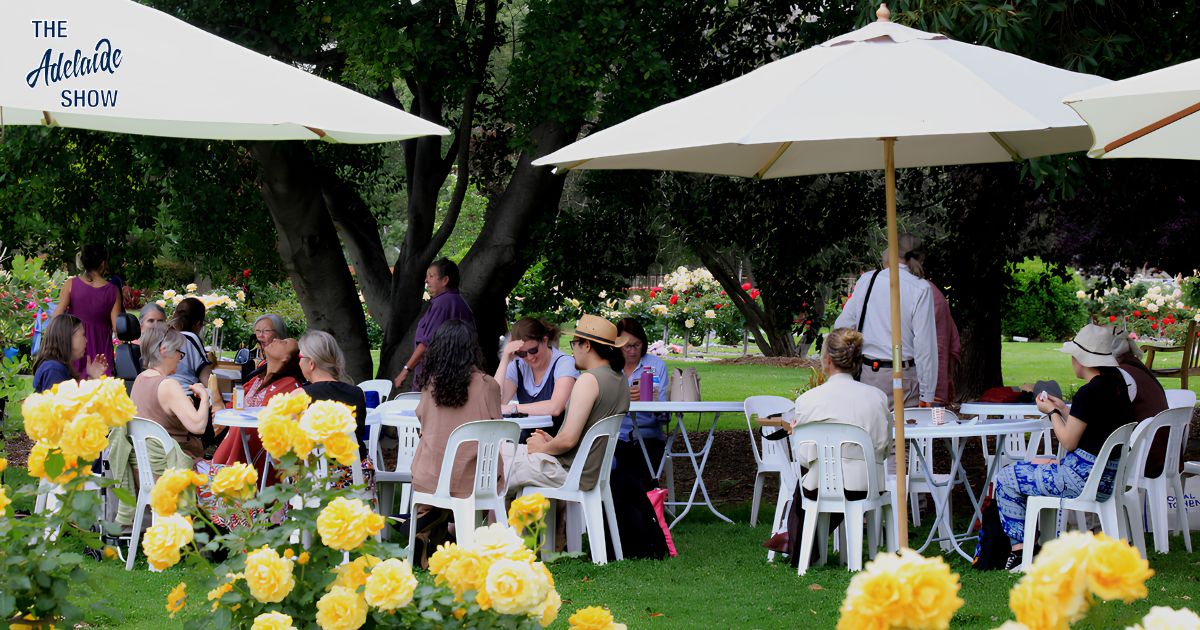
And can I also mention, in the middle of the day we shut down everything for an hour and a half and have a community picnic And Centennial Park is so beautiful. It, it’s full of yellow roses, and it’s just gorgeous at this time of the year. And the picnic is really important because what [01:08:00] we see happening is people talking to each other that don’t even know each other, and having these conversations.
There, um, is a whole lot of market stalls there which are very educational, um, on, uh, all sorts of different things that people can, um, find information. So that’s a really important part of the day as well. So- Mm … people can bring their picnic blanket and hamper, or they can, uh, buy food from Wildflowers, the cafe there, whatever they like.
But it’s a really important part of the festival. And in the past, we’ve only done this for an hour, but I’ve extended it to an hour and a half this year because I really see that community aspect of people talking to each other as being such an important part of this festival.
Catherine Ooi: Yeah. Mm-hmm. Mm-hmm. So much of what we wanna do is sort of bring death into a, a, a place of safety where, where people can, um, feel safe while they, uh, have this explorative, uh, journey, which is why I mention creative activities, anything which is, has a creative element, recognizing, uh, that for most people, um, they are experiences in which [01:09:00] language is absolutely insufficient.
Um, and, and the trajectory, that entry point into exploring more into death and dying might not be, “Here’s a really intellectual talk about what…” You know, like, but, but through art and music and dance and song and colors and nature, um, you know, which brings out hu- like, real human emotions. Yeah.
Steve Davis: So the message I’m getting is whether we think we are or not, we are meditating on death As we go through life, no matter what
Catherine Ooi: Love that.
I love that
Steve Davis: How we get comfortable to understand that and nurture that, bit like a pilot light in the background, um, will help dictate the ease of our transition from the life that we know now to whatever comes next. Hence, this is a wonderful way to come together, and [01:10:00] who knows? Happenstance, uh, things will be enjoyed and uncovered.
The– As I said, there’s links to all the show notes. Um, India and Catherine, thank you very much for joining me on this, on The Adelaide Show. It’s been a pleasure. Thank you for being so open.
Catherine Ooi: Thank you so much, Steve. That’s– It’s been really good, and I, I really hope, uh, some of your listeners will come to The Death Festival and decide, have, have that question to be or not to be or what to be, um, through conversations at the festival.
Steve Davis: And-
India Wallace: Thank you, Steve. Thank you so much. It’s been wonderful. We really appreciate being on, and I think we’ve covered a lot of ground in this podcast.
Steve Davis: We have. And we’ve got one last pebble to throw. And by the way, Catherine, when you have finished your PhD, that’ll be wonderful to get you back to talk.
We’ll have a second interrogation of you, uh, for that. Um, but India, I wonder if you could help us draw this to a close ’cause I believe the very last [01:11:00] session, uh, of the day is a loving-kindness meditation that’s being held, and, uh, I have– I’ve been a bit off it. I, I used to use it a lot. There’s a wonderful app called Waking Up with Sam Harris that I’ve been using- Mm
to understand an approach to meditation, and he does often come back and do a loving-kindness meditation. Is it possible to explain to us what that is and maybe give us a taste of a couple of questions that we could hold drawn from the loving-kindness meditation world, um, for the lead up and beyond attending The Death Festival?
India Wallace: Yeah, some of the Buddhist terminology is very different to how we normally speak. We don’t normally go around wishing people loving kindness, do we? No. But it really is looking at loving kindness for others, um, and loving kindness for ourself, which is very, very important. And really this relates so much back to death and dying [01:12:00] because, you know, we need to go softly, don’t we?
We need to go so softly, and we need community. Uh, we need someone to walk with us as, as we’ve talked about, and it’s a beautiful way to end the festival, I think, to just give that loving kindness out to others and back to ourselves. So that’s really what it’s all about and why I’ve chosen that for the end of the festival, Steve, for Venerable Drime to do that meditation.
It’s a beautiful, uplifting way to leave the day.
Steve Davis: And the gist of a loving kindness meditation?
India Wallace: Uh, it’ll just take you through those processes. So it’ll, it’ll ask you to imagine someone and you’re sending them loving kindness from your heart. Um, it often asks you to imagine someone that you’re not so friendly with.
And, uh, if you’ve never done this meditation before, we suggest that you don’t go to your worst enemy because it can bring up a lot of issues for you. But you know, someone maybe that you’re annoyed with or, you know, just have a slight [01:13:00] problem with. So then it’s sending loving kindness from your heart to theirs and then doing that same process to yourself, which is usually the most difficult one I find
TAS Theme: And now it’s time for the musical pilgrimage
Steve Davis: In the musical pilgrimage, we have the latest song. In fact, it’s hot off the press from Steve Davis and The Virtualosos, and it’s called Cowards of Us All. And a couple of points to get us in the right frame of mind for listening to this song, ’cause it doesn’t marry 100% with everything that, um, India and Catherine were saying, but in a Venn diagram, there’s quite a bit of crossover.
So it was deeply inspired by seeing Andrew Scott’s rendition or performance of To Be or Not to Be, that famous soliloquy, which got me actually [01:14:00] reading the soliloquy more slowly this time. And his performance brought stuff to the surface I’d never really noticed before. But it’s this bit towards the end where it says, “Who would fardels bear,” so who would carry burdens, “to grunt and sweat under a weary life, but that the dread of something after death, the undiscovered country from whose bourn no traveler returns, puzzles the will and makes us rather bear those ills we have than fly to others that we know not of.
Thus, conscience makes cowards of us all.” And it’s that angle, that truth that Shakespeare wrote in the 1500s is amazing. The fear of the unknown, the undiscovered country, can lead us to being timid and, um, subjected to the fear-mongering of [01:15:00] people who put around their images of what happens after death, of, uh, great hells and, and great heavens and what have you, a-a-across all sorts of spectrums.
And I hope this song is a way of unlocking that because there was something in the conversation. I’m listening to a lot of history at the moment and reflecting on why do some people get caught in the history books, and they loom large over us, and others, millions of humans, flip by on this planet without a mention, uh, in posterity.
And of course, the, the historical figures typically to be the ones who have sort of run a s- a, a scythe through the world. They have killed countless people. Their armies have raped and murdered many. They’ve ruined crops. They’ve gorged themselves on other people’s, uh, riches and bounty. And they’re the ones we remember because I guess [01:16:00] they do have a big impact on us.
But what about the person who’s a peasant or a farmer in the middle of a nondescript time, uh, happily going away and then suddenly gets seconded into the army? And I think it was Catherine who said, “Well, yes, that can happen to you in, in, in life,” but the same thing could happen. You don’t need a Napoleon You can just get a really horrible diagnosis out of the blue, and that is the same sort of dynamic at work, and that really, uh, stayed close with me.
And so that wound its way into this, into this song. And the other thing that I thought was interesting here is, uh, at– While I was writing, midway through, my daughter was home, and I saw her fiddling around at the back door, and she was letting a moth out, a moth that had been inside. And then she came in a few minutes later and said, uh, “Dad, I was [01:17:00] really happy watching that moth, you know, fly around outside.
It had made it.” And next minute, a bird swooped down and grabbed it. Uh, in, in fact, as it happened, it sort of grabbed it. The moth fell into the pot plants we have, perhaps thinking it’s made it safely, but the bird came back and gobbled it up and finished the job. And it just seemed like a very important reminder when I’m writing a song about death to stay grounded in the cycle, the circle of what happens with life and the rearranging of atoms here on this planet.
So all of this somehow is bundled into a song. Let’s have a listen to it now. It’s called Cowards of Us All.
Steve Davis & The Virtualosos: I don’t have a need for a hero. My Rome is already burning down [01:18:00] A blinding diagnosis that I didn’t see coming. You’re speaking, but I do not hear a sound
Hamlet now makes sense to me, asking to be or not to be. Is it better to stay here and fight outrageous pain? Do I go to sleep and hope I, I one day live again? We’re all headed to the undiscovered country That place where the slings and arrows fall. We can fight the troubles or
Fearing death makes cowards [01:19:00] of us all I imagined life with more tomorrows. Now I find my world was built on shifting sand I’ve worked all my days and toiled in the sun. Now it’s going down and fate has shown its hand Hamlet now makes sense to me, asking to be or not to be. Is it better to stay here and fight outrageous pain?
Do I go to sleep and hope I one day live again? We’re all heading to the undiscovered country [01:20:00] Place where the slings and arrows fall. We can fight the troubles all
Fearing death makes cowards of us all
I thought I could read my way to wisdom But instead, the authors disagree Whatever gets you through the night seems to me as right as the Buddha’s words on suffering and grief
Moth at the door go [01:21:00] outside. I smiled as I watched it fly Then I saw a bird swoop down from on high and complete another circle of life
Hamlet now makes sense to me. Asking to be or not to be. Is it better to stay here and fight outrageous pain? Or do I go to sleep and hope I one day live again? We’re all here
That place where the slings and arrows fall. We [01:22:00] can fight the troubles or go gently. Cause fearing death makes cowards of us all. I will fight the troubles or go gently. Cause fearing death makes cowards of us
Steve Davis: That’s Steve Davis and The Virtual Osos and Cowards of Us All. And if it’s the, uh, first time you’ve heard a song by Steve Davis and The Virtual Osos, I write all these songs longhand, um, painfully. Uh, you can see all the lyrics and all the scribbled notes on my website, [01:23:00] stevedavis.com.au. And, uh, I use my Virtual Osos, my virtual session band, to bring them to life.
But I’m on a quest. I must find a small collection of different performers who don’t necessarily write lyrics, but they want to take some lyrics under their wings and give them life themselves, perhaps more successfully than The Moth, talking about wings. Um, so if that’s you, please reach out because I
This … As soon as we have that, these versions, these draft songs that I’ve crafted, uh, will get put aside, and the live human version will be the one that maintains its life, perhaps to be mentioned in a history book one day. Oh, vanity of vanities. Thank you very much for listening. Remember, the links to the SA Death Festival are in the show notes.
I wish you well as you continue your journey, and I hope this conversation we had today is a good companion that perhaps seeds [01:24:00] further conversations with others. Until next time, it’s good night from me, Steve Davis, and good night, Don.
AJ Davis: The Adelaide Show podcast is produced by my dad, Steve Davis. If you want to start a podcast or get some help producing creative content, talk to him.
Visit stevedavis.com.au. Thanks, AJ. I’m Caitlin Davis, and I agree with everything my sister said. But there’s one more thing to say. If you’ve enjoyed this podcast, please leave a rating or a review, ’cause that will make my dad really happy. Oh, and one more thing. If you really, really liked it, please help a friend put The Adelaide Show on their phone.
Thanks for listening.
Buzz, buzz, I wanna be
TAS Theme: Adelaide, Adelaide, [01:25:00] Adelaide